
This expert guide helps nonprofit leaders evaluate what to do next with Raiser’s Edge—whether you’re navigating the end of Database View, struggling with NXT, or rethinking how your fundraising technology supports modern strategies. Inside, readers will find a clear breakdown of Raiser’s Edge’s strengths and limitations, along with an honest comparison between fundraising‑specific products and flexible CRM platforms like Salesforce and Microsoft.
Our goal is to outline practical paths forward, from optimizing Raiser’s Edge with strategic integrations to moving to another product or a full platform ecosystem. It explores emerging trends in automation and AI, highlights where Raiser’s Edge is evolving—and where gaps remain—and offers grounded guidance on future‑proofing your fundraising technology. Throughout, Heller Consulting provides an objective, mission‑aligned perspective to help organizations make confident, well‑informed decisions about their next step.
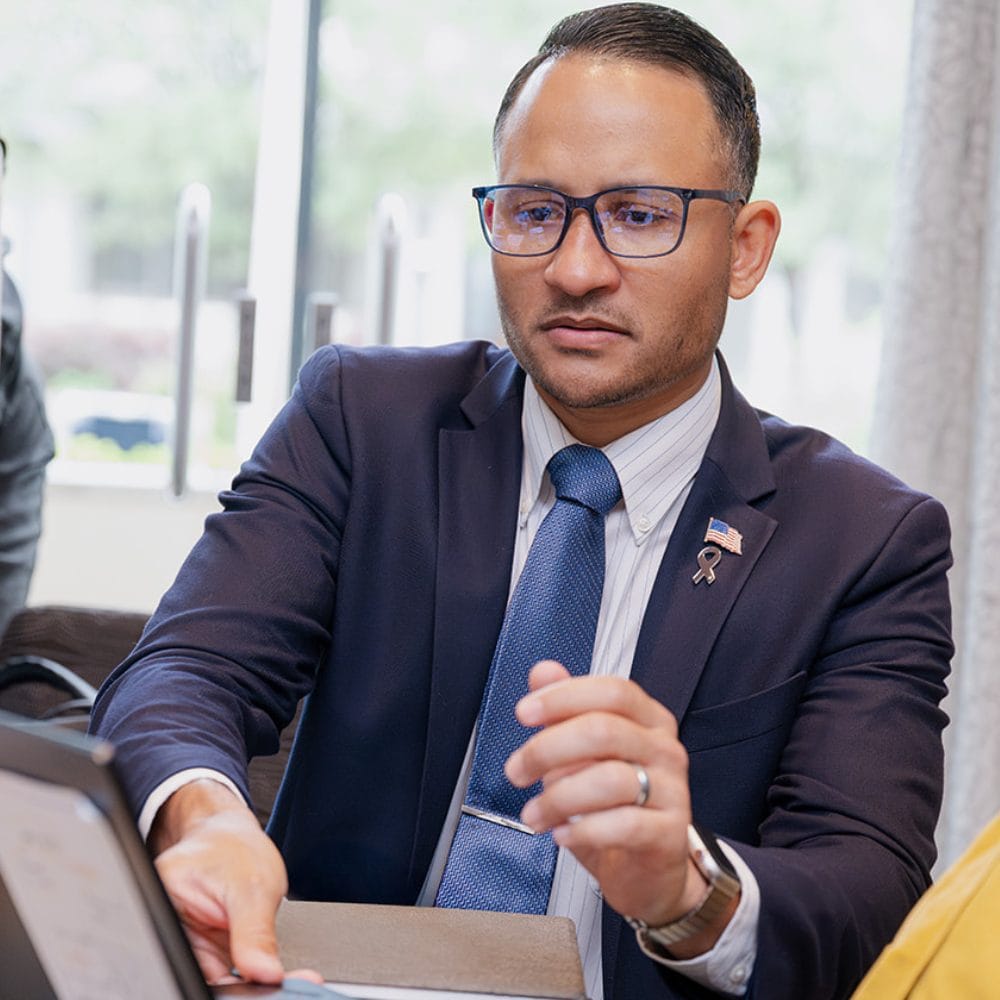





So you’re at a crossroads with your fundraising technology. Whether you’re on Raiser’s Edge 7 and facing the end of Database View, or you’re on NXT and it’s not meeting your needs, making the right decision for your organization’s future requires careful consideration of your unique needs, challenges, and goals.
Today’s nonprofit leaders have more choices than ever. Blackbaud’s Raiser’s Edge continues to excel at core fundraising functions like gift processing, donor management, and traditional fundraising workflows. For many organizations, it remains a reliable and effective solution. At the same time, your current implementation isn’t keeping pace with evolving fundraising strategies, digital transformation initiatives, and the need for cross-departmental collaboration.
This guide is designed to help you:
At Heller Consulting, our goal is to help nonprofits and education institutions find the best technology solutions for their needs—not just point everyone to a specific system. Each organization has unique requirements and must weigh the pros and cons of any technology decision—whether it’s to enhance what you have, integrate with complementary systems, or transition to a new platform.
With these ideas in mind, here’s what you need to know as you navigate your fundraising technology options.
Something to keep in mind if you’re considering CRM solutions from Salesforce or Microsoft is that you’re not looking at an apples-to-apples comparison with your current system. Raiser’s Edge is a fundraising-specific product, while Salesforce and Microsoft offer platforms on which fundraising (and many other) solutions are built. Blackbaud is bridging the gap with its BB CRM solution, which is marketed to enterprise-level orgs with large fundraising volume. It includes membership and volunteer management, financial accounting, and analytics.

A product is a single application that solves a specific need, like fundraising. It is already built out by a provider based on typical functional requirements and is usually easy to deploy. But keep in mind that a product will not be able to support a multitude of operations, and it will lack the flexibility you could gain with a platform. It also doesn’t necessarily integrate with other tools, meaning that the bidirectional information sharing required from modern fundraising best practices like responsive suggested gift amounts may not be easy, or possible.
On the other hand, when executed well, an ecosystem of tools connected to or built on a platform can support even the most complex nonprofit operations. This requires a change in thinking about the nature of your fundraising software, but it can pay off in the long run—especially if you want to do more with your fundraising program than Raiser’s Edge can support. Even though moving to Salesforce or Microsoft will take time and effort, in the end, it’s possible to not only reach parity with traditional fundraising functionality in Raiser’s Edge, but also be able to do much more.
There are several core areas of fundraising-related functionality that you would be replacing if you were to move away from Raiser’s Edge:
Raiser’s Edge provides this functionality in one solution but you’re locked into using each of the tools provided. For example, if you find the email or marketing automation tool doesn’t meet your needs, you don’t have much choice except to continue using it.
With platforms, you can choose from a host of products and select the one in each area that best meets your needs.
Salesforce, Microsoft, and BB CRM are all platforms that allow you to customize your system to your unique organizational and fundraising needs.
At the same time, the idea of moving to a platform versus an individual product might seem intimidating. It requires a shift in thought for your development team and your organization. And it will require an investment in time and dollars for the implementation and migration.
Salesforce and Microsoft Dynamics 365 CRMs have a lot to offer organizations, including:
They offer app marketplaces and integration options that allow you to customize and extend the solutions with best-of-breed products to meet your specific needs.
A solution built on Salesforce or Microsoft is centered around CRM, which can help you grow donor relationships more effectively. It gives you a holistic view of constituents and donors, allowing you to collect more data and use data from other departments in your organization so you have more insights into donor behaviors and preferences, and helps you send targeted messages at the right time to the right constituents and donors.
Tools available in the platforms give you the ability to automate processes, such as sending a targeted email series, to help you do more with less manual work.
If you’re thinking about moving to a platform, here are the top eight things to keep in mind
Start by listing your organization’s must-haves, such as ease of use, features and functionality, and integration needs. Then, refer to that list as you review the following considerations.
Consider what other solutions are available within the platform ecosystem, such as productivity and marketing automation tools, portals or community engagement tools.
Microsoft and Salesforce each use different nonprofit data models that specify how information, such as account and contact records, are treated within the system; and both differ from Raiser’s Edge. Be sure to understand these models, as they determine how your data will be mapped from your current system to the new system and might require changes to your processes to function optimally.
Understand the third-party applications that integrate with each system. For example, Salesforce has a large and mature AppExchange marketplace, which might be important if you anticipate needing to expand and enhance your solution extensively. Meanwhile, Microsoft’s AppSource is smaller and less mature, but might have the solutions you need. Microsoft also offers integration options using Power Automate, with hundreds of pre-built connectors. Both solutions also support API integrations.
Depending on your staff’s technology experience, you might find that one system is more intuitive for your organization than another. Be sure to review the look and feel of each system, as well as how they organize navigation, to better understand which user experience will work best for your team.
Consider how long it will take your organization to learn and begin using each system. This will depend not only on specific technology learning, but also on the degree to which you will need to update or change business processes to use the new system and how your organization handles change.
Both Microsoft and Salesforce offer portal, or community, solutions, allowing a nonprofit to expose data in several standard and custom objects to constituents. Microsoft offers Power Portals, which also allow you to display data to constituents. Both solutions come with templates for the most common types of portals, plus tools to manage the web content and the data you want to expose, and two user types.
Make sure you understand what it will take to maintain each system and handle user profiles, roles, permissions, data access, and overall security. Depending on the size and experience of the staff that will be maintaining and administering your system, you might find that one system is a better fit for your organization.
For example, if you are already using Microsoft tools, your IT team might have less of a learning curve to incorporate Dynamics 365 into the mix. Alternately, if your team has already been exposed to the Salesforce security model, Nonprofit Cloud or a Salesforce managed package might be a better fit.
If your goals are mostly to improve the user experience because you find Raiser’s Edge to be outdated, then you might be a good candidate for other product offerings, including those from Blackbaud. But if you have new strategies you want to try and are looking to improve collaboration across your organization, or you have useful data you want to leverage from other departments (such as programs), then you are a good candidate to move to a flexible platform like Salesforce or Microsoft. Forward-thinking organizations who want to unlock new potential for fundraising typically find that moving to a platform is worth the investment.
Nonprofits that have long relied on Raiser’s Edge often choose to stay with the platform due to its deep-rooted integration into their fundraising operations and institutional knowledge. Many organizations have heavily customized their Raiser’s Edge environments over the years, tailoring workflows, reports, and data structures to their unique needs. This level of investment in time and training makes switching to a new system a daunting and potentially disruptive process. It may seem old hat now, but Raiser’s Edge 7 was revolutionary at the time, and it served a wide range of nonprofits over many decades. That kind of service inspires a level of loyalty for many veteran fundraisers.
For RE7 users in particular, Raiser’s Edge NXT offers a familiar interface and functionality that eases the transition for existing users while introducing modern capabilities. Blackbaud emphasizes that NXT helps nonprofits raise more money through features like AI-driven donor insights, optimized donation forms, and integrated event and proposal tracking. The platform also supports a multi-channel fundraising approach, enabling organizations to manage everything from major gifts to recurring donations within a single system. This consolidation reduces the need for multiple disconnected tools, streamlining operations and improving data accuracy.
Another compelling reason to stay with Raiser’s Edge is its seamless integration with Blackbaud’s sister product Financial Edge, creating a unified ecosystem for fundraising and financial management. This integration allows for an efficient gift reconciliation process , accurate financial reporting, and better accountability across departments. For nonprofits already using Financial Edge, using Raiser’s Edge NXT ensures that staff can continue leveraging familiar tools while benefiting from ongoing enhancements and support tailored to for the nonprofit sector.
Before leaping into platform options, it’s important to point out that you can choose to leave Raiser’s Edge for another fundraising-specific product. Many Heller Consulting clients have found success with newer fundraising products that do one thing but do it well. By going to another product, you will still have a suite of functionality and a vendor that is equipped to demo the product for your team and provide support over time. Adopting a new product instead of switching to a platform can often be a good fit for development teams that are not necessarily looking to share data or workflows with other departments in the organization.
Despite the advancements in Raiser’s Edge, many nonprofits encounter limitations when comparing it to newer, more advanced technology platforms. One key area is predictive analytics. While Raiser’s Edge offers basic donor scoring, it lacks the depth of AI-driven analytics that can forecast specific giving behaviors, suggest optimal ask amounts, or detect signs of donor fatigue. To get these more sophisticated insights, Raiser’s Edge nonprofits must find third-party tools or integrations, adding complexity and cost.
It has other limitations in segmentation and personalization. Modern platforms increasingly offer intelligent segmentation that goes beyond traditional Recency, Frequency, Monetary (RFM) models. These systems can identify micro-segments based on nuanced behavioral patterns and engagement signals. Similarly, true personalization at scale—where messaging dynamically adapts to individual donor preferences and behaviors using machine learning—is not fully realized within Raiser’s Edge alone. This can hinder efforts to deliver highly tailored donor experiences that drive deeper engagement.
Additionally, Raiser’s Edge has limited capabilities in areas like natural language processing and complex process automation. It struggles to automatically analyze and categorize donor communications, social media mentions, and qualitative feedback. And while it supports basic workflow automation, more intricate, multi-step processes that span departments often require external platforms or custom integrations.
Technology decisions don’t exist in isolation—they’re foundational to your organization’s ability to advance its mission. The Heller Consulting team brings proven methodologies and specialized nonprofit expertise to help you navigate your options and implement the right solution for your unique needs.
Our collaborative approach means we work alongside your team to:
Whether your future includes an optimization plan for Raiser’s Edge, a hybrid approach with strategic integrations, or a transition to a new platform, we help you make informed decisions that align with your mission and maximize your technology investment.
No matter what you decide to do with your fundraising technology, consider these tips based on our extensive experience helping nonprofits get the most from their tools:
Analyze your Raiser’s Edge contract terms, including renewal dates and notice periods, and develop a realistic timeline that accounts for selection, implementation, and transition. We recommend building in buffer time—most platform migrations require 6-12 months for proper execution.
Document all Raiser’s Edge modules currently in use—for example gift processing, events, and membership. Identify the critical workflows each module supports and their importance to your operations. Catalog existing integrations with other systems, both formal and informal, and conduct a workflow analysis that covers key business processes and manual workarounds.
Simply moving to a new system will do nothing to clean up bad data. Start now to get a sense of how much data clean-up you might need to do before changing to new software. Many orgs we work with have inconsistent use of data, especially in campaign structure, attributes, and constituent codes. Start there—and we have a guide for that too! Even if you ultimately decide to stay on Raiser’s Edge, having clean, updated data will help you operate more efficiently and effectively.
Our structured implementation methodology includes strategic discovery, tailored roadmap development, and solution design that respects your unique processes. We integrate comprehensive change management throughout implementation—including stakeholder engagement, communication planning, and customized training—ensuring high adoption rates. Our partnership extends beyond go-live with ongoing optimization support to help you continually evolve your technology ecosystem.
With 29 years focused exclusively on nonprofit technology, our team brings certified expertise in both Raiser’s Edge and alternative platforms. Our consultants combine technical mastery with nonprofit-specific knowledge, having successfully guided thousands of organizations through technology transitions. Our specialized data migration experience and integration expertise are particularly valuable for Raiser’s Edge clients looking to optimize their current system or build connections with complementary technologies while maintaining data integrity and operational continuity.


Heller Consulting helps nonprofit, education, and healthcare organizations leverage technology to achieve their missions. There is no more experienced platform-agnostic technology services partner serving the cause sector.